TL;DR: AI is changing Amazon DSP management by enabling continuous optimization workflows that were previously too manual to execute consistently, effectively raising the standard for what advertisers should expect from agencies and internal teams. As a result, advertisers should increasingly evaluate DSP management not just on outcomes like ROAS, but on whether campaigns are being actively optimized across the operational levers that drive performance.
4 minute read
The operational discipline advertisers apply to Amazon DSP execution is hindered by the platforms complexity, resulting in spending a fixed budget against a static ROAS target, accompanied by weak reporting.
A few examples of Amazon DSP challenges advertisers experience (but might not realize):
- Up to one in five DSP dollars can end up on Solitaire and crossword app inventory if QA isn't being actively run.
- Campaigns routinely run at sub-40% viewability for weeks before anyone notices.
- Bid modifiers sit unused in most accounts because they're too operationally intensive to manage manually.
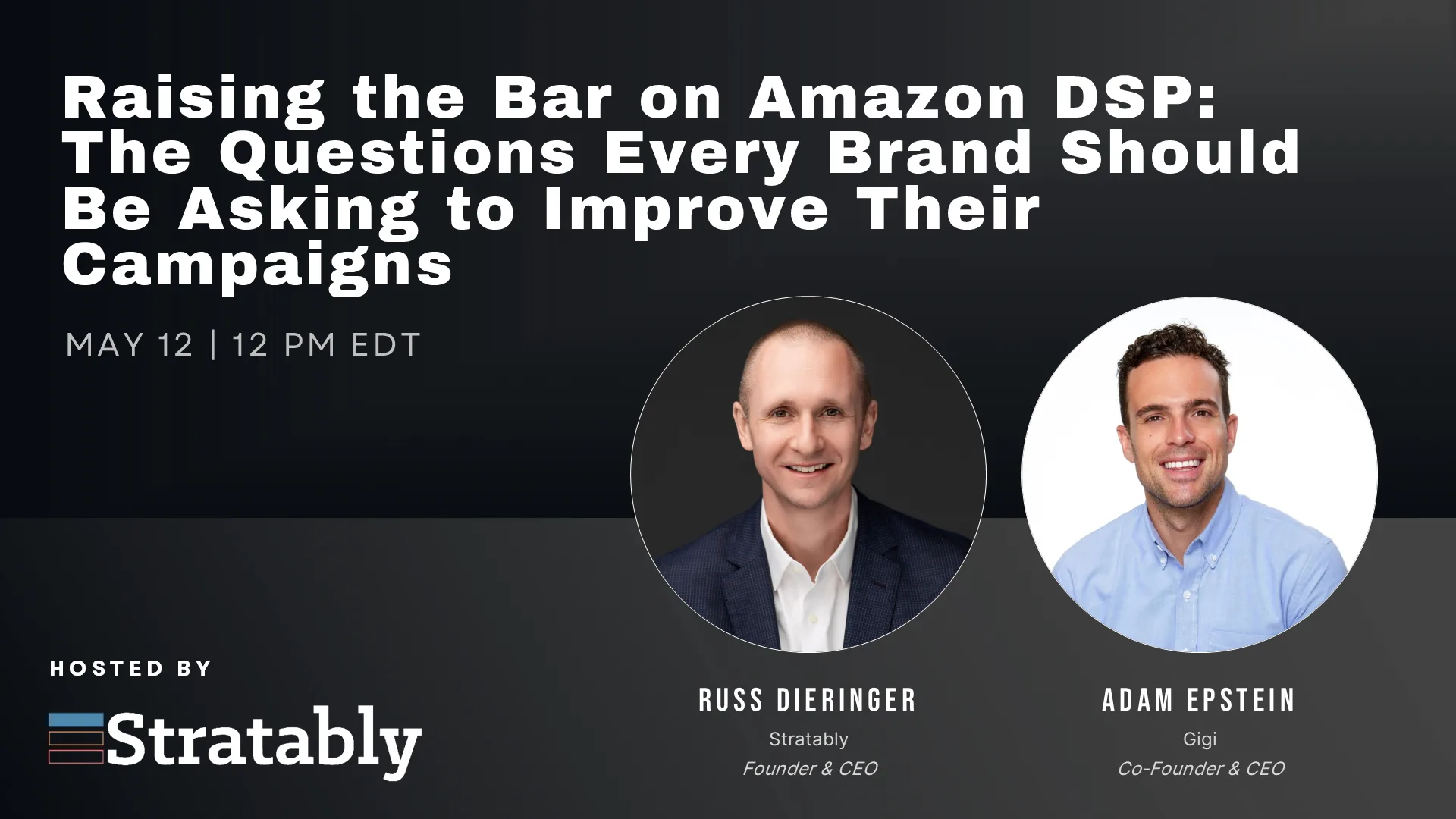
We hosted Adam Epstein, Co-Founder and CEO of Gigi, to walk through what’s possible on the DSP when AI is deployed. He shared what excellent Amazon DSP management looks like today, while providing specific questions and benchmarks advertisers can use to assess whether their DSP investment is being optimally deployed.
The session covered:
- What a baseline of active DSP management should include
- How to evaluate DSP campaign optimization frequency
- The specific questions brands should put to their agency partners, and vice versa, what agency partners should communicate to their clients
- How AI is raising the bar for what's operationally possible, and why that resets what brands should expect from their DSP spend
Join the Stratably community
-
Bite-sized market updates
-
Deep dive analyses
-
Industry benchmarks
-
Retailer forecasts
-
Invites to live events
-
And More!
Enterprise Membership unlocks our full insights that you and your team can use to drive alignment across your organization, improve your forecasting, and invest in the right capabilities.
Simply put, it makes your organization much more informed, providing a competitive edge over your rivals.