TL;DR: Positive AVN outcomes are within reach, with 1-in-3 vendors seeing neutral to positive impacts to their margins, trade terms, and cost prices in 2026. Success requires year-round margin work, preparing quantified pain points, anchored opening asks, and pre-aligned escalation plans, understanding and exercising your commercial leverage, and steering investments towards growth drivers.
3 minute read
It’s time to start preparing for 2027 AVNs, and there’s a better starting point than repeating last year’s playbook: learning from the vendors that came out ahead in 2026.
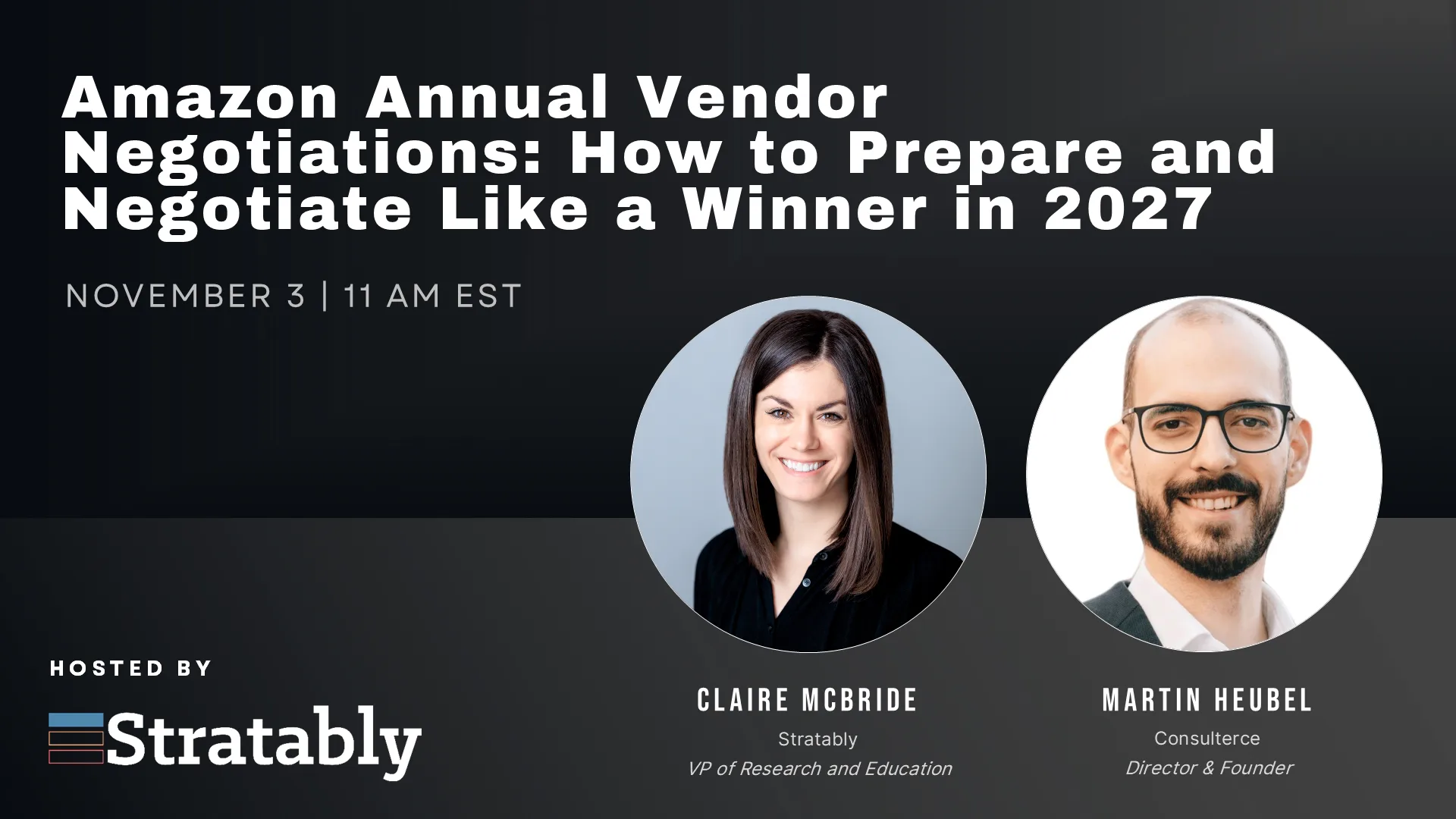
In this webinar, Stratably and Martin Heubel of Consulterce shared what “AVN Winners” did differently this year, plus the negotiation strategies and tactics that drive successful outcomes. The session drew on the third-annual Amazon AVN Benchmark Study of 227 1P vendors and the two teams’ combined experience across hundreds of AVNs.
What We Covered:
- Who the AVN Winners are: One-in-three vendors held or improved margins, trade terms, and cost prices in 2026 negotiations.
- What set them apart: The leverage they brought to the table, how smoothly their negotiations went, and where they steered their investment.
- How to prep for 2027: Benchmarking your current terms and performance, putting a dollar value on operational pain points, setting opening asks that protect your minimum targets, and educating up and across the organization.
- How to respond to Amazon’s negotiation style: What “partnership” means to Amazon, and how to acknowledge the retailer’s leverage while holding the line where it matters.
- AVN hot topics: Margin guarantees, cost price changes, and punitive measures like buy box suppressions and PO holds.
- Six-part cheat sheet for driving profitability through effective negotiations.
- Live Q&A with attendees.
Join the Stratably community
-
Bite-sized market updates
-
Deep dive analyses
-
Industry benchmarks
-
Retailer forecasts
-
Invites to live events
-
And More!
Enterprise Membership unlocks our full insights that you and your team can use to drive alignment across your organization, improve your forecasting, and invest in the right capabilities.
Simply put, it makes your organization much more informed, providing a competitive edge over your rivals.